Disclosure: ifaro is an independent style guide. Some links on this site are affiliate links — if you make a purchase through them, we may earn a small commission at no extra cost to you. This supports our work and keeps ifaro free. We only recommend pieces we believe honor your style identity. Affiliate Disclosure.
Wardrobe
Soft Dramatic Outfit Formulas: 5 Combinations That Always Work
Soft Dramatic — The Diva Chic
When sharp bones meet luxurious curves, dressing becomes an art form. Here is how to honour both.
There is a particular kind of woman the fashion world has historically struggled to dress well. She has the commanding vertical line of the Dramatic — sharp angles, striking bone structure, an instinct for drama — but her frame yields to softness, to curve, to a richness of flesh that pure geometry cannot contain. She reaches for a sleek architectural blazer and finds it fighting her figure. She tries something fluid and romantic and disappears inside it.
She is the Soft Dramatic. And what she needs is not compromise. It is synthesis.
YOUR EDIT
Pieces Curated for This Archetype
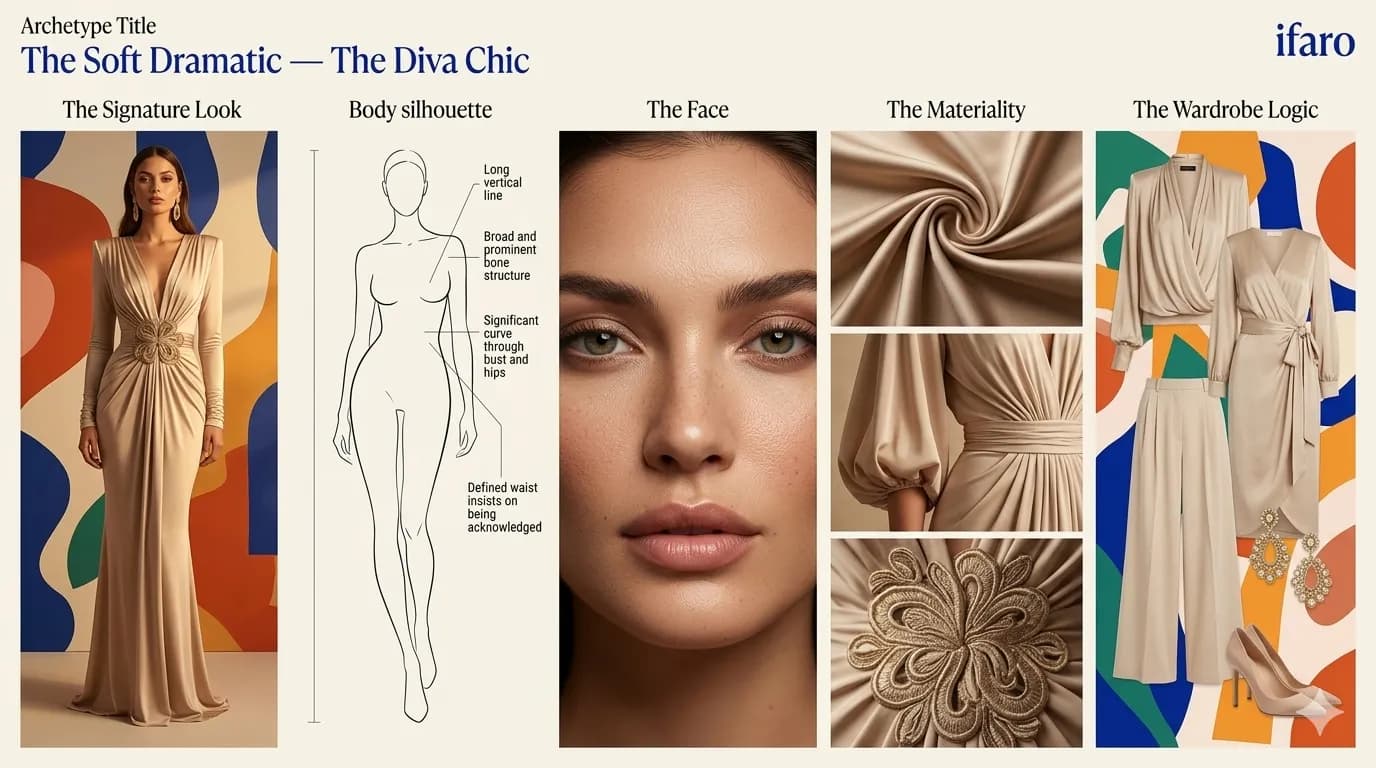
The five formulas below are not trends. They are structural principles — outfits built around the logic of the Soft Dramatic essence, which asks for two things simultaneously: long, strong vertical lines that honour the scale and yang of the bone structure, and soft, sumptuous materials that yield to the yin of the body. Every combination here satisfies both demands.
Formula One: The Column Dress, Elevated
The principle: A single unbroken vertical line, in a fabric that moves.
The most reliable piece in any Soft Dramatic wardrobe is a floor- or midi-length column dress in jersey, matte crepe, or bias-cut satin. Nothing structured, nothing stiff. The silhouette should skim rather than cling, suggesting the body's curves without mapping them precisely.
The combination: - Floor-length column dress in matte crepe, one deep, saturated colour - Minimal jewellery — one substantial piece, worn at the collarbone or ear - A pointed-toe heel or minimal mule in a tonal shade - No belt
The belt is the crucial omission. The Soft Dramatic's waist is not the focal point — the vertical sweep of the figure is. Breaking that line at the waist interrupts the drama the silhouette creates naturally. Let the dress breathe.
What to look for: The neckline matters enormously here. A deep V, a wide square, or a dramatic off-the-shoulder cut all work beautifully — they echo the bold, angular quality of the bone structure while leaving the shoulder and décolleté unencumbered. High, closed necklines crowd the face and reduce the sense of vertical scale that is this archetype's great asset.
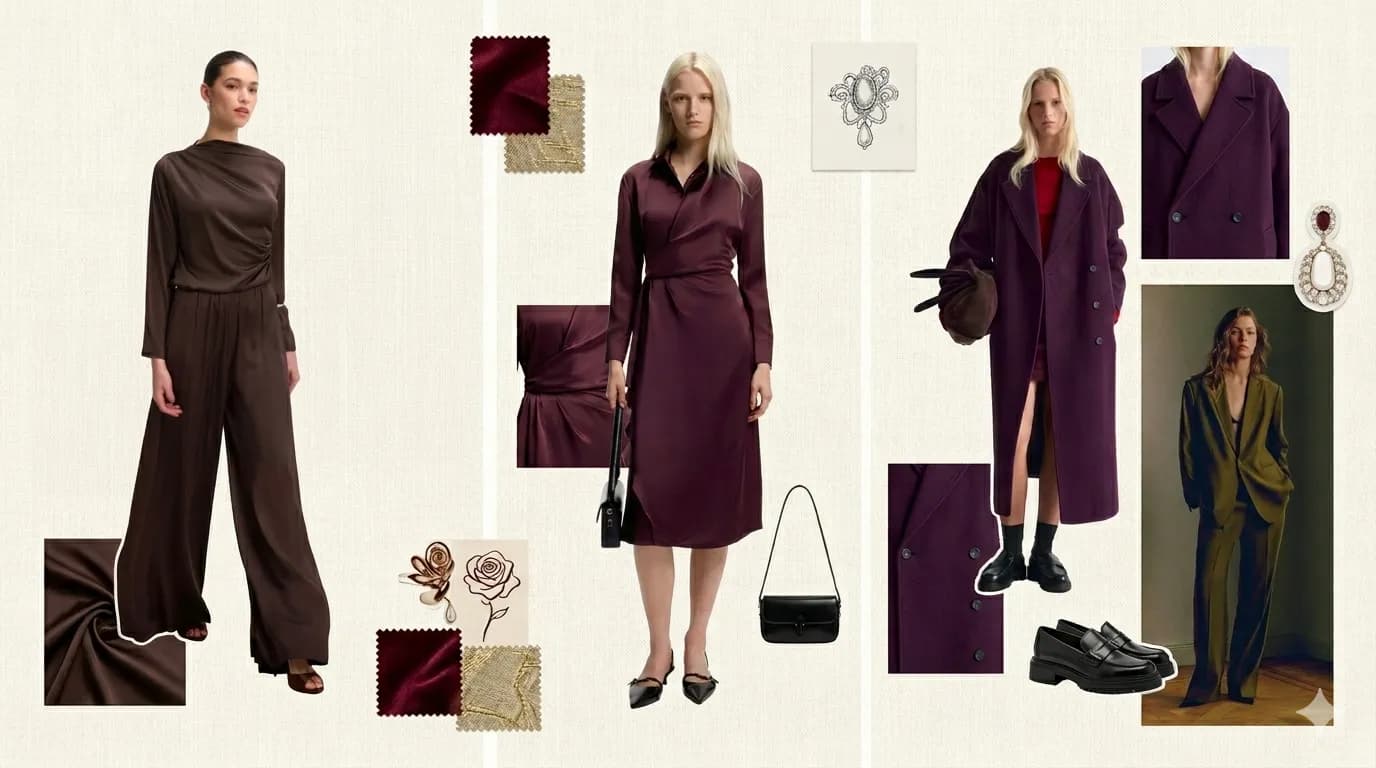
The Soft Dramatic can carry volume that would overwhelm many other archetypes, but only when it flows. Wide-leg trousers — genuinely wide, in a fabric with weight and drape — are a foundation piece. They extend the vertical line through the leg and accommodate the fullness of the hip and thigh in the way that straight-cut or tapered trousers rarely manage.
The combination: - Wide-leg trousers in heavy crepe, silk-look fabric, or fluid linen, in a dark neutral or strong colour - A draped or wrap blouse with a low neckline, softly tucked at the front only — not fully tucked - A low-heeled mule or substantial block heel - One sculptural earring, large in scale
The half-tuck is worth dwelling on. Fully tucking a blouse into wide trousers creates a defined waist — which, again, interrupts the vertical sweep. The partial tuck adds visual interest and a looseness at the hip that flatters without constricting. It is a small technical adjustment with an outsized result.
Colour logic: The easiest version of this formula is head-to-toe tonal — a single colour family across both pieces, with variation in shade or texture. The Soft Dramatic can handle contrast, but when working with two substantial pieces, tonal dressing is forgiving and instinctively elegant.
Formula Three: The Oversized Blazer, Worn as a Dress
The principle: Take the structure away from where it doesn't belong and put it where it does.
An oversized blazer — truly oversized, falling to mid-thigh — worn with nothing beneath but a simple slip or camisole and finished with wide-leg trousers or tailored palazzo pants is one of the most sophisticated solutions for the Soft Dramatic archetype.
The combination: - An oversized blazer in substantial fabric (heavy wool, boucle, or crepe), left fully open - A silk or satin camisole in the same tone as the trouser - Wide or palazzo trousers - A mule or pointed low boot
Why this works: The blazer provides the structural, angular line the Soft Dramatic's bone structure calls for, but worn open and oversized, it never constricts the body. The soft layer beneath acknowledges the yin. The trousers elongate. The result is dramatic without being armoured.
The common mistake is buttoning the blazer, which immediately cuts the figure at the waist and eliminates the elegant open column. Wear it like a coat, always.
Scale note: The blazer must be genuinely oversized — proportioned to the Soft Dramatic's scale. A blazer designed for a smaller frame will simply look borrowed rather than intentional. The shoulder seam should fall past the natural shoulder, the body should skim below the hip, and the sleeves should be long enough to be pushed or rolled with authority.
Formula Four: The Wrap Dress, Done Correctly
The principle: Wrap dresses are often recommended universally. For the Soft Dramatic, they require one adjustment.
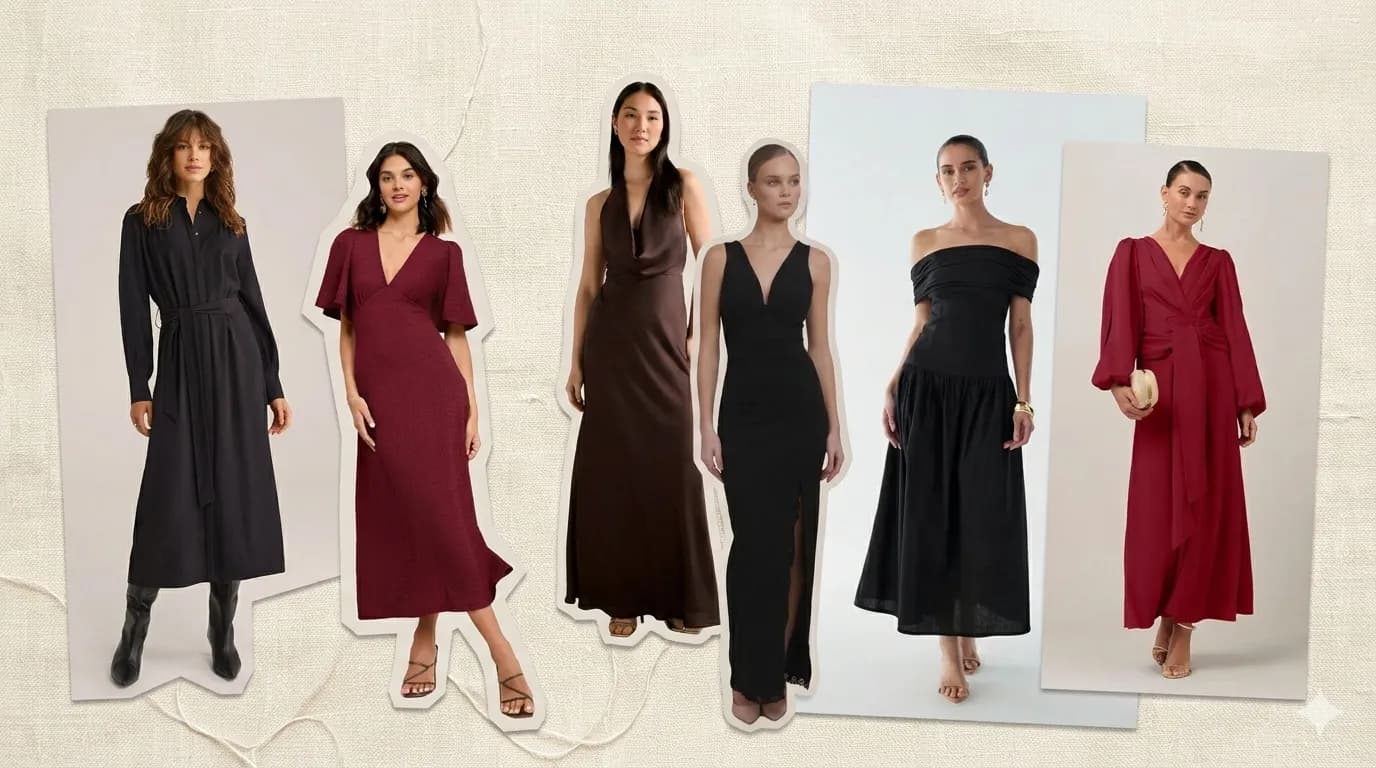
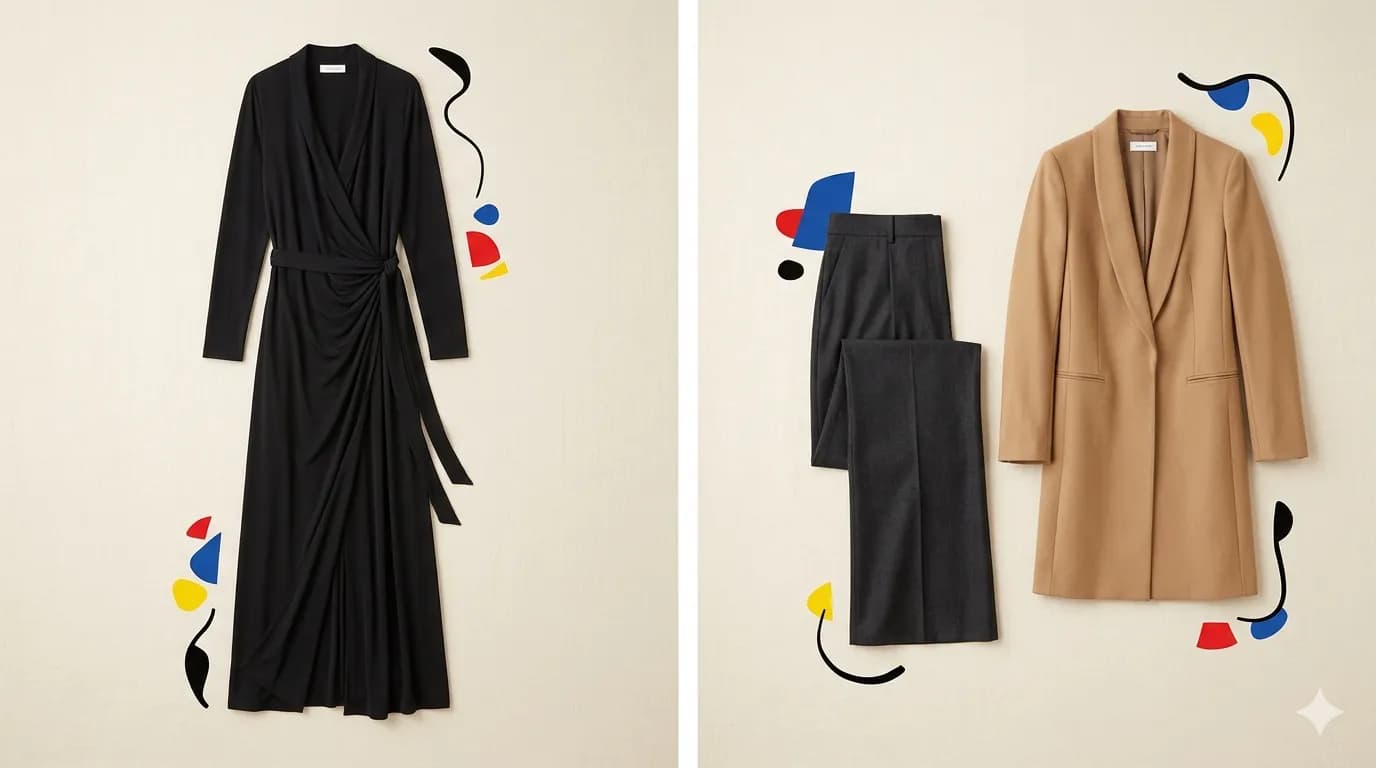
The wrap dress is, in theory, well-suited to this archetype: it creates a V-neckline, yields to the body's curves, and drapes rather than structures. In practice, most wrap dresses are cut too short, too tight at the waist, and too fussy in their fabric to serve the Soft Dramatic well.
The combination: - A wrap dress in a substantial, fluid fabric — matte jersey, crepe, or a weight of silk that holds its shape — falling to the knee or below - The wrap tied at the back rather than the front, or at the side, eliminating the bow at the waist - Minimal accessories: a single chain necklace at collarbone length, or nothing - A heeled sandal or pointed mule
The back-tie adjustment is the detail that elevates this formula. A bow at the front of a wrap dress draws the eye directly to the waist and creates visual fussiness at the centre of the body. Tied at the back or side, the dress reads as a clean, uninterrupted column of fabric — dramatically simpler and more aligned with the Soft Dramatic's instinct for bold clarity.
What to avoid: Wrap dresses in floral or small-scale prints, particularly in lightweight fabrics. The Soft Dramatic requires a scale and weight that small, busy prints cannot provide. Solid, deeply saturated colours or large abstract prints are the appropriate register.
Formula Five: The Long Coat as Architecture
The principle: Outerwear is not an afterthought. For the Soft Dramatic, it is often the centrepiece.
A floor-length or maxi coat in a substantial fabric — heavy wool, cashmere, or structured bouclé — worn over the simplest possible base (a fluid wide-leg trouser and camisole, or a column dress) creates the most naturally harmonious silhouette for this archetype. The coat provides the strong structural line. Everything beneath provides the softness.
The combination: - A maxi or floor-length coat in a dark, saturated colour: midnight navy, deep plum, forest green, or black - Beneath: the simplest possible layer — a camisole tucked into wide trousers, or a slip dress - Substantial pointed-toe boots or heeled mules - No scarf, no belt, no accessories that interrupt the coat's line
The coat as the outfit is a liberating proposition for the Soft Dramatic. It removes the need to engineer a harmonious relationship between multiple garments. The coat holds all the structure; the layers beneath are purely textural and tactile — soft, moving, comfortable.
The length is non-negotiable. A knee-length coat cuts the Soft Dramatic at precisely the wrong point and reduces the sense of sweeping vertical line that is this archetype's greatest visual strength. Longer, always.
The Underlying Logic
Across all five formulas, two principles repeat themselves.
The first is scale. Every piece must be large enough for the Soft Dramatic's natural architecture. Small-scale anything — small prints, small jewellery, small silhouettes, small proportions — reads as incongruous against the largeness of this archetype's bone structure and presence. Scale up, consistently.
The second is the absence of waist emphasis. This requires conscious unlearning, because so much conventional style advice centres on defining the waist. For the Soft Dramatic, the waist is not the focal point — the full sweep of the figure, from shoulder to hem, is. Belts, tucked shirts, fitted jackets at the hip: these are the habitual choices that fracture the silhouette and reduce rather than amplify the natural drama of this essence.
What remains when you honour the scale and resist the waist: a figure that reads as inherently cinematic, intentional, and at ease. Not in spite of its complexity, but because of it.
Discover your own style archetype — and the formulas built specifically for it — by taking the ifaro Style Discovery.